
Joe Van Vynckt, CEO, Charps, on hydrotesting and inspection in complex environments.
Pressure testing is an opportunity to validate the integrity and operating readiness of a pipeline system, confirming its ability to perform safely, reliably, and as intended under expected operating conditions.
While pressure testing can identify leaks and confirm a pipeline’s ability to safely withstand anticipated operating pressures and service conditions, it is not simply a measure of original construction quality. For existing systems, it is a proactive investment in continued integrity – helping operators validate asset conditions, manage risk, and protect the environment and communities along the pipeline corridor. The hydrostatic testing process is one of the most well accepted and standardised methods for testing system integrity – and it’s one that Charps often applies. Simple, clear, and easy for operators to understand, turnkey hydrostatic testing services are essential to verify safety and compliance for long-term operation.
Additionally, when combined with real-time monitoring, leak detection, and digital reporting support, hydrotesting can be richly enhanced for the benefit of the operator. Advanced monitoring and analysis tools help identify pressure anomalies and support rapid leak localisation, while comprehensive digital records, pressure data, and final reports provide complete visibility and documentation of test activities.
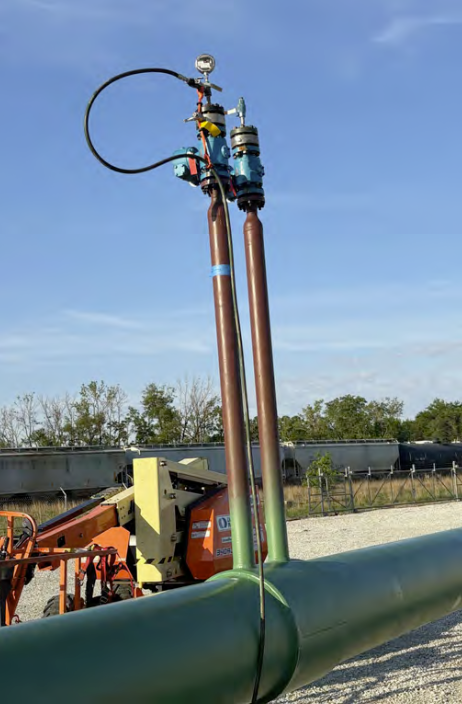
When designed properly, hydrostatic testing offers confidence in the systems’ structural integrity. However, the test’s reliability depends on how the process is managed. Throughout the process, open and direct collaboration with operators, engineers, and inspectors helps support test procedures, maintain documentation, and keep project requirements on track. When applying hydrotesting, a six-step process is executed:
1. Project-specific preparation: every test begins with detailed planning, engineering coordination, and review of project requirements.
2. Building a reliable baseline: controlled filling and stabilisation procedures to establish the conditions required for accurate test results.
3. Visibility throughout the process: pressure data is continuously monitored throughout testing to ensure compliance and identify anomalies.
4. Separating noise from reality: the latest leak-detection technology is applied to advanced analytics and temperature-compensated pressure analysis to help distinguish thermal effects from actual leak events.
5. Preparing for service: following successful testing, dewatering and drying operations prepare the asset for commissioning.
6. Documented and defensible: comprehensive digital records, test data, and reporting provide operators with complete documentation and visibility.
If these steps aren’t adhered to, or the overall process is mismanaged, then failure is a risk.
Cracks in weld joints on new construction, damaged flanges, incorrect gasket installation, elevation changes, and pressure exceeding top-rated capacity are all common causes of hydrotesting failures. And within safety-critical environments, failure isn’t an option, because failure means that there’s no guarantee of the system’s reliability or integrity. This would then be in direct odds with the responsibilities of a safe and trusted operator, and with strict government regulations that vary per region, including (in the US) those from the Environmental Protection Agency (EPA), the Code of Federal Regulations (CFR), and the Pipeline and Hazardous Materials Safety Administration (PHMSA).
Regulations and standards from governing bodies require that operators can prove the integrity of their system, resulting in the critical nature of pressure testing to demonstrate that a system faces no threat of leaks or integrity failure.
This isn’t a display of power or to deter expansion and growth. It’s about consideration for a number of key environmental, operational, and regulatory factors.
Environmental factors and regulations
Pipeline construction and maintenance in the US takes place across diverse and complex environments and conditions. Overseen by the likes of the EPA and PHMSA, strict regulations are critical to prevent disaster and limit environmental impact. Hydrotesting allows operators to demonstrate that a system poses no ecological threat.
Responsible project execution is imperative to protect the environment, with spill prevention procedures and site-specific controls helping minimise project impacts and support regulatory compliance. With diverse environments and external surrounding factors to consider, there’s no room for a cookie cutter approach to hydrotesting; instead, testing strategies must be tailored to each individual project. Doing so will help operators achieve safe, compliant, and reliable results regardless of the surrounding landscape.
Away from city centres and cosmopolitan living, pipeline systems often stretch across challenging terrain, including mountainous and variable elevation. When, and where, testing gets more complex, experience in varied environments is a significant bonus. For projects in remote areas, where access and mobilisation are limited, specialised planning and field execution expertise is necessary, incorporating careful pressure management strategies and testing activities to ensure safe and reliable testing across lengthy pipeline segments.
With a rich and biodiverse country to protect and preserve, there’s no wonder that regulations are so strict, determining standards for transportation, distribution, and processing of all pipeline products.

Performing hydrotesting services in accordance with applicable federal, state, and industry requirements, industry leaders such as Charps work closely with partners and collaborators to maintain that testing activities are executed safely, efficiently, and in full compliance with project specifications.
To guarantee this, every project is planned and executed to align with operator-specific procedures, engineering requirements, and testing criteria. To prove it, comprehensive records, test data, and reporting provide the documentation needed for project verification and regulatory compliance.
Leak detection and hydrotesting
Navigating regulatory and environmental considerations is made a lot simpler when you have the resources to collaborate and rely upon. Identifying and locating leaks is a core function of hydrotesting, with operators often monitoring for leaks during testing to take a two-birds-one-stone approach. With leak detection technologies becoming increasingly advanced, it’s more important than ever to integrate them into hydrotesting.
Traditional hydrotesting can confirm a pressure loss, but determining the source of that loss often requires additional investigation, downtime, and cost. Combining hydrostatic testing practices with advanced technologies provides operators with greater visibility, accuracy, and confidence throughout every phase of the testing process.
Operators need more than a pass/fail result. They need visibility into test performance, access to critical data, and confidence that the system won’t be impacted by leaks. From planning and stabilisation through final reporting, an integrated approach helps reduce downtime, improve decision-making, and enhance overall test reliability. This is achieved by utilising leak detection technologies that offer real-time monitoring, temperature-corrected pressure analysis, and advanced leak detection and localisation capabilities to provide operators with greater visibility into test performance.
Integrating hydrotesting and leak locating technologies offers several benefits, including:
- High-speed pressure monitoring helps identify abnormal pressure behavior as it occurs, allowing teams to investigate potential issues sooner.
- Advanced analytics help distinguish normal thermal effects from potential leak events, improving confidence in test results, and reducing unnecessary retesting.
- Access live pressure monitoring dashboards and testing data throughout the duration of the test, helping teams stay informed and make decisions faster.
- Time-stamped pressure records, digital reporting, and final integrity documentation provide a comprehensive record of testing activities and outcomes.
This is the approach that Charps takes, backed by its subsidiary company PipeSense, the provider of leak detection, monitoring, and hydrotesting solutions.
By combining the resources, operators can access support that localises leaks within a typical accuracy of ±50 ft, helping reduce excavation scope, troubleshooting time, and project delays. Instead of simply identifying that a pressure loss has occurred, operators gain access to monitoring and analytics that provide greater visibility into test performance and support faster, more informed decision-making.
Mobile pressure testing
Appreciating the environmental factors that lead to hydrotesting taking place in challenging and diverse locations, we have prioritised mobile pressure testing. Delivered via pressure test trailers equipped to support safe, efficient, and reliable hydrostatic testing operations, mobile trailers have been designed for rapid mobilisation and to serve as the operational hub for testing activities in the field, wherever they take place.
Integrated with monitoring equipment, trailers provide accurate pressure data collection throughout the test, helping operators maintain visibility and confidence from start to finish. In addition, the inclusion of specialised pumps, manifolds, and support equipment allows crews to efficiently manage filling, pressurization, testing, and dewatering activities across a variety of project conditions.
Whether operating in remote locations, urban environments, or environmentally sensitive areas, mobile hydrotesting helps support safe and dependable project execution.

Case study: how Charps secured CalFire certification
Earlier this year, Charps proved its ability to provide hydrotesting support in regulatory-sensitive and operationally complex environments, after being confirmed as a state-approved service provider in California.
Verified by the California Department of Forestry and Fire Protection (CalFire), Charps was designated as an Approved Hydrostatic Testing Company, meeting state requirements that we possess the in-house expertise and resources for pipeline integrity testing.
California’s pipeline safety standards are stricter than elsewhere in the country, meaning the list of approved vendors is limited and specialised. To secure the required certification, we showcased our pressure testing service range, which includes hydrostatic test planning and execution, and our decades of experience, project records, and customer testimonials to share with CalFire throughout the application process.
With our pressure test mobile trailers, we are now working to support regional operators across the West Coast – a crucial development as California remains in the spotlight as local businesses and governing bodies strive for the right balance between energy supply and environmental protection. Ensuring that pipelines operate safely and without leaks or structural damage is critical to achieving both aims.
Joe Van Vynckt, CEO, Charps, PipeSense, Norminn Industrial